Mattress basics · Infant sleep
Choosing an Organic Crib Sleep Surface: Fit, Firmness, and Care
A crib mattress has a quiet but important job: it should fit the crib, stay firm and flat, and be kept in good condition. Organic materials may matter to a family’s preferences, but they do not replace safe-sleep practices. The clearest way to choose is to consider fit, construction, labeling, and care—while keeping current infant sleep guidance at the center.
Start with the sleep space, not the label
Shopping for a crib mattress can quickly become a tour of unfamiliar terms: organic cotton, natural latex, waterproof barriers, certifications, breathable covers, and multiple firmness ratings. Those details may help families compare products, but they can obscure the first practical question: will the mattress fit the specific crib securely?
A suitable crib sleep surface should sit flat and fit snugly within the crib’s frame. A mattress that is too small can leave a hazardous gap at an edge; one that is too large may bow, buckle, or fail to rest properly. Fit is not a cosmetic matter. It is part of how the sleep space works as a whole.
Before buying, check the crib’s instructions and dimensions, then compare them with the mattress manufacturer’s stated size. Do not rely on a label such as “standard” alone. Measure the interior of the crib and confirm that the mattress is intended for that model or size. When the mattress is in place, inspect all sides and corners. It should lie flat, remain stable, and not leave a gap that could trap an infant.
Some standards describe a basic full-size crib mattress as approximately 28 inches by 52⅜ inches, but dimensions can vary, and those figures are not a substitute for checking the crib itself. Mini cribs, portable cribs, and other sleep products may require mattresses made for their exact design. If the crib and mattress instructions disagree or leave uncertainty, contact the manufacturer before use.
Fit should be checked again after setup, after moving the crib, and whenever the mattress or its cover is changed. A mattress that once seemed secure may shift, or a replacement cover may affect how it sits. Keep the crib’s original instructions available; they can clarify what mattress dimensions and accessories are permitted.
Why firmness and a flat surface matter
For infant sleep, the surface should be firm and flat—not plush, padded, inclined, or shaped to hold the baby in a particular position. A firm surface does not mean that it must feel hard to an adult hand. It means the mattress does not sag or conform deeply under the infant’s weight. A flat surface remains level rather than sloping or creating a hollow.
Soft surfaces, loose cushioning, and added layers can create risks for an infant who cannot reliably move away from an obstruction. That is why safe-sleep guidance from organizations such as the American Academy of Pediatrics emphasizes placing infants on their backs on a firm, flat, non-inclined sleep surface, with only a fitted sheet. Caregivers should follow current recommendations from trusted health and safety authorities and their child’s clinician.
Terms such as “supportive,” “plush,” or “breathable” in product descriptions do not establish that a mattress is appropriate for an infant. Nor should a product’s feel be judged by pressing it briefly with a hand. Choose a mattress designed and labeled for the intended crib and age range, and follow its instructions. Do not try to make a surface firmer by adding boards, padding, or other materials.
Avoid adding mattress toppers, pillows, quilts, comforters, positioners, or thick pads to an infant sleep space. Even if a layer is described as organic, natural, cooling, or protective, those words do not make it suitable for unsupervised infant sleep. Use a fitted sheet designed to fit the mattress securely. If a product’s intended use or safety is unclear, leave it out of the crib until you have verified the manufacturer’s guidance and relevant safety recommendations.
Infant sleep needs change as a baby grows, but the core principles remain straightforward: a clear sleep space, a firm and flat surface, and placement on the back for every sleep unless a qualified clinician gives specific medical advice. Parents and caregivers should also check current guidance, since recommendations and product standards may be updated.
What “organic” tells you—and what it does not
Organic describes how certain materials were produced or processed under a defined certification scheme. Depending on the product, the claim may relate to cotton, wool, latex, or another component. It does not automatically describe the entire mattress, establish its firmness, prove a snug fit, or certify that it meets every safety requirement for a crib.
Read labels closely. Is the claim about one fabric, the filling, or the complete product? Which organization issued the certification, and what does that certification cover? A certification can help verify a particular material or production standard, but it should not be treated as a substitute for checking the mattress’s intended use, dimensions, safety labeling, and care instructions.
Likewise, broad phrases such as “chemical-free,” “non-toxic,” and “hypoallergenic” can be difficult to interpret without clear definitions and supporting information. Ask what specific materials and processes are being described. Check whether claims are backed by an independent certification or a plainly explained standard. Families may reasonably prefer organic materials, but the choice should be informed rather than driven by the implication that a particular label guarantees a safer sleep outcome.
Construction varies. A crib mattress may use foam, innersprings, latex, or combinations of materials, with covers and waterproof layers that also differ. No material type is automatically the right choice for every family. The relevant questions are whether the product is intended for the crib and infant use, whether its construction and labeling are clear, whether it fits correctly, and whether the manufacturer provides practical care instructions.
Some mattresses have a firmer side for infants and a softer side intended for an older child. Use each side only at the age and stage specified by the manufacturer. Do not flip or rotate a mattress based on assumption, and do not interpret two-sided construction as permission to use a softer surface for an infant.
A practical checklist before purchase
A measured, unhurried comparison is more useful than a long list of marketing claims. Before choosing, confirm the following:
- Compatibility: The mattress is designed for the exact type and size of crib you own.
- Dimensions: The product measurements match the crib manufacturer’s requirements.
- Firmness and shape: It is intended for infant use and provides a firm, flat surface without an incline or deep contour.
- Labeling: The manufacturer identifies materials, intended use, warnings, and any applicable safety information clearly.
- Cover and accessories: You understand whether the cover is removable and which sheets or protectors, if any, are specifically allowed.
- Cleaning: You can follow the care instructions and manage ordinary spills or messes without improvising.
- Condition: The mattress arrives intact, with no tears, exposed filling, deformation, or other damage.
- Recall checks: You can verify the product’s model and manufacturer and check for relevant safety notices or recalls.
Do not purchase a used mattress if its history, condition, or model details are unclear. A secondhand product may have hidden damage, may no longer fit the crib, or may be subject to a recall. If you are considering one, check the manufacturer’s model information and current recall notices, inspect it carefully, and make sure the crib’s instructions allow its use. When doubts remain, choosing a new, correctly sized mattress may be the simpler route.
Cost and sustainability can also enter the decision. A higher price or organic claim does not by itself prove better fit or safer use. Compare the product’s documented materials, expected care, warranty terms, and useful life, but do not let budget pressure lead to a mattress that is damaged, poorly fitting, or not intended for the crib. If affordability is a concern, a pediatrician, community health program, or local family-support organization may be able to point caregivers toward resources.
Everyday care: clean carefully, inspect regularly
Care instructions are part of a mattress’s safe and practical use. Some covers can be wiped clean; others may be removable or washable. The core may not be washable at all. Follow the manufacturer’s directions rather than soaking the mattress, using unapproved cleaners, or applying heat that could damage materials. If a cover is removable, confirm whether it is designed to be put back on in a specific way.
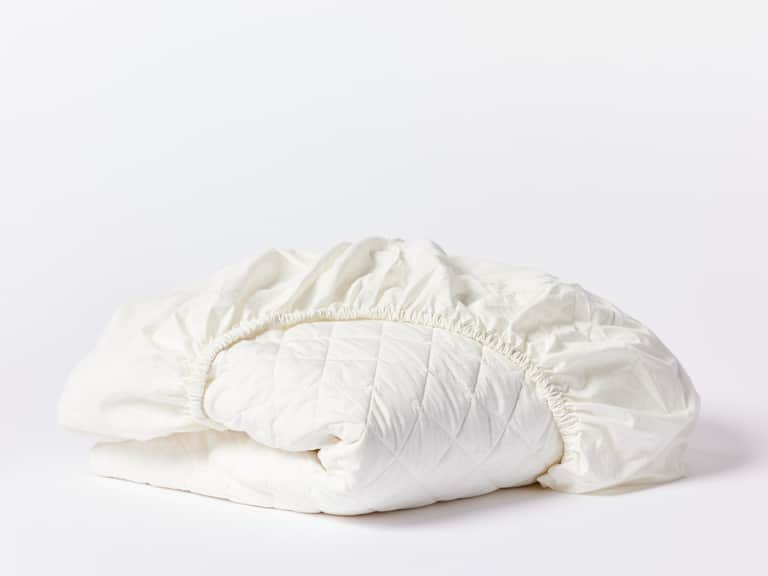
Use only a fitted sheet made for the mattress dimensions and depth. After laundering, make sure it still fits tightly and does not bunch or lift at the corners. Do not use a sheet that is stretched, torn, or too large. The sleep surface should remain flat and uncluttered when the infant is placed in the crib.
Inspect the mattress periodically, especially after a leak or spill. Look for tears, holes, broken seams, exposed interior material, persistent odor, mold, sagging, or a cover that no longer stays secure. Check that the mattress continues to lie flat and that the crib fit remains snug. A waterproof cover may help protect a mattress from routine moisture, but only use one if it is compatible with the mattress and crib and does not alter the fit or surface in a way the manufacturer prohibits.
If the mattress becomes wet, clean and dry it exactly as directed. Do not put the infant back on a damp surface. If moisture has reached the interior, or the mattress cannot be thoroughly cleaned and dried according to instructions, ask the manufacturer whether it remains suitable for use. Persistent mold, structural damage, or material breakdown calls for careful attention, not a scented spray or improvised repair.
Keep the manufacturer’s care guidance and model information somewhere accessible. That information can help answer questions about washing, replacement parts, compatible covers, warranty limitations, and recalls. A quick check when the crib is assembled—and routine checks afterward—can help catch problems before they become harder to assess.
A clear crib is part of the decision
The mattress is one piece of an infant’s sleep environment. Once the mattress and fitted sheet are in place, keep the crib free of pillows, blankets, stuffed toys, bumpers, and other soft objects. Do not use sleep positioners or products that claim to prevent a baby from rolling unless a qualified medical professional has given specific direction. For warmth, caregivers can consult current safe-sleep recommendations about appropriate clothing or wearable blankets rather than adding loose bedding.
Place the baby on their back for every sleep, including naps, on the approved flat surface. Room-sharing without bed-sharing is commonly recommended in early infancy; follow up-to-date guidance from pediatric health authorities for details. Avoid smoke exposure and keep the sleep area away from hazards such as cords. If an infant falls asleep in a sitting device, move them to a firm, flat sleep surface as soon as it is practical and safe to do so.
These basics matter more than whether the mattress has a particular finish, color, or premium feature. They also make the decision easier: families do not need to turn the crib into a complicated system of accessories. A correctly fitting mattress, a fitted sheet, and an uncluttered sleep space are a more useful starting point than add-ons that promise to improve comfort or position.
Questions families commonly ask
Does an organic crib mattress make sleep safer?
Organic certification may provide information about how specified materials were produced, but it does not establish that a mattress is safer for infant sleep. Confirm that the product is intended for the crib, fits correctly, is firm and flat, and is used according to its instructions and current safe-sleep guidance.
Can a mattress protector be used?
Only use a protector if the mattress and crib manufacturers permit it and it fits securely without changing the surface or creating bunching. A fitted sheet should remain snug. Do not add a thick, cushioned, or loose layer to make the mattress feel softer or more comfortable.
How can I tell whether the mattress is firm enough?
Use the manufacturer’s infant-use labeling and instructions rather than relying on a quick hand test or an online description. The surface should be firm, flat, and free from deep depressions or an incline. If its intended use or condition is uncertain, ask the manufacturer or a qualified health professional.
When should a crib mattress be replaced?
There is no single replacement date that applies to every mattress. Follow the manufacturer’s guidance and replace a product that is damaged, misshapen, contaminated beyond the approved cleaning method, or no longer fits securely. Check recall notices and do not rely on a mattress with an unknown history.
The simplest choice is the one that checks out
Choosing an organic crib sleep surface does not require deciphering every claim on the market. Begin with the crib’s dimensions and instructions. Select a mattress made for that crib and intended for infant use. Confirm a snug fit, a firm and flat surface, clear product labeling, and care directions you can follow. Treat organic materials and certifications as information about specified components—not as a replacement for those essentials.
Then keep the sleep space simple: a properly fitted mattress, a tight fitted sheet, and no loose or soft items. Inspect the surface over time and respond promptly to damage, moisture, or changes in fit. When a question remains, the manufacturer’s instructions and current guidance from trusted pediatric and safety authorities are better sources than a product slogan.
This article provides general educational information and is not a substitute for individualized medical advice. Safe-sleep recommendations and product requirements may be updated; consult current guidance from recognized pediatric and consumer-safety authorities.