Mattress construction · Buying guide
How Vispring Builds Layered Support with Natural Upholstery
A mattress is not one material doing one job. It is a set of components working together: springs respond to pressure, upholstery softens the surface, and the cover holds the construction in place. Understanding how those layers interact can make comparisons more useful—and help shoppers ask better questions than simply, “Is it soft or firm?”
Published November 8, 2026
The most useful way to understand a mattress is to think in layers. The sleeper feels the surface first, but the surface is only the opening act. Beneath it, upholstery materials shape pressure relief and temperature feel; below those, the spring system carries and distributes weight; around the whole assembly, the cover and edge construction help preserve its form. Change any one of those elements and the experience can change, even when two mattresses share a familiar label such as “pocket spring.”
Vispring is associated with spring mattresses made with natural upholstery. The details are not identical across every model, and names alone cannot tell a shopper precisely how a particular bed will feel. Materials, spring configuration, layer thickness and finishing all matter. A careful comparison therefore starts with construction, not reputation or a single headline claim.
This guide explains the broad principles behind layered support and natural upholstery, then turns them into practical questions for evaluating Vispring models—or any mattress with springs and substantial comfort layers. It is informational, not a substitute for testing a mattress in person or checking the manufacturer’s specifications for the exact model under consideration.
How mattress layers work together
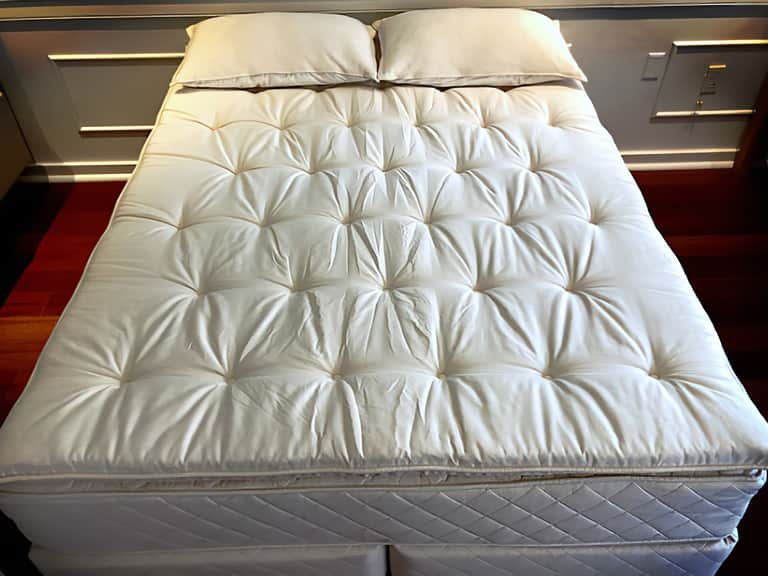
A layered mattress can be understood as a system with several related jobs. The top upholstery influences the first impression: softness, cushioning and how quickly the surface yields. Deeper comfort layers help distribute pressure and shape the transition between the surface and the support core. The spring system provides the underlying resistance that keeps the sleeper from sinking without limit. The cover contains the materials and contributes to the tactile feel.
These roles are not completely separate. A thick, yielding upholstery package can make a responsive spring system feel more cushioned. A firmer or thinner surface may allow the springs’ movement to feel more immediate. The same spring type can therefore produce noticeably different results when paired with different layers above it. Conversely, a similar list of natural materials does not guarantee a similar feel if their quantities, arrangement or density differ.
That is why a quick comparison based only on the word “firm” is incomplete. Firmness is a subjective description of the overall sensation, not a full account of support. A mattress can feel plush at the surface while still resisting deeper compression. Another can feel firm from the first contact but offer a different degree of pressure distribution. Body size, sleeping position, personal preference and the base beneath the mattress all influence how the construction is experienced.
It is helpful to distinguish comfort from support, while recognizing that shoppers often use the terms interchangeably. Comfort describes how agreeable the surface feels to an individual. Support refers more to how the mattress responds to body weight and helps maintain a stable sleeping position. Neither can be judged reliably from a materials list alone. The most valuable specifications are those that explain how the layers are arranged and how the manufacturer describes their intended role.
The key idea: a mattress’s feel comes from the interaction of spring system, upholstery, cover and foundation—not from any single ingredient in isolation.
The spring system: response beneath the surface
Springs are the structural engine of a traditional spring mattress. They compress under load and push back, but the way that response is organized varies. In a pocket-spring system, individual springs are enclosed in fabric pockets, allowing them to move with more independence than a connected coil unit. This can help the mattress respond more locally to pressure, although the actual sensation depends on spring design, count, tension, upholstery and construction as a whole.
Spring count is an easy number to advertise and a poor number to treat as a verdict. More springs do not automatically mean better support or greater durability. Coil dimensions, wire characteristics, the layout of the spring unit and the materials above it all affect performance. Counts may also be presented in ways that are not directly comparable between brands or mattress sizes. When comparing models, shoppers should look for a clear explanation of the spring system rather than assuming that the biggest figure is decisive.
Some spring mattresses include more than one spring unit or vary their spring arrangement through the mattress. Such choices can influence how the bed responds across its surface and how the support feels at different depths. Model-specific descriptions are essential: a brand’s general approach does not establish that every model uses the same configuration. Ask what type of springs are used, how they are arranged, and whether the design differs by size or model.
Responsiveness is another useful term. A responsive mattress tends to react to changes in pressure rather than making the sleeper feel deeply held in one position. Some people appreciate that ease of movement; others prefer a more enveloping surface. Neither response is universally superior. A shopper who changes positions often may weigh mobility differently from someone who prioritizes a cushioned, settled sensation. Testing should include turning, sitting near the edge and lying in usual sleep positions—not merely pressing a hand into the top.
Springs do not operate in a vacuum. Upholstery can moderate the spring response, while a suitable foundation provides a stable platform for the entire structure. If a mattress is placed on an unsuitable or worn base, the resulting feel may not reflect the intended design. Before purchase, check the manufacturer’s foundation requirements and ensure that the existing frame is compatible.
Natural upholstery and the character of the surface
Natural upholstery is a broad category, not a promise of one uniform sensation. Wool, cotton, hair and other fibers can appear in mattress construction, sometimes in combination. The materials may be layered, blended, or used in particular sections of a design. Their purpose is not simply to decorate a specification sheet: upholstery contributes cushioning, surface resilience, moisture handling and the way a mattress changes under repeated use.
Wool is commonly valued for its springy, insulating character and its ability to manage moisture. Cotton is a familiar plant fiber used in textiles and upholstery, with a feel and performance influenced by how it is processed and layered. Hair fibers may add resilience and structure in some constructions. These broad descriptions can help orient a shopper, but they are not guarantees of a particular temperature or comfort result. Fiber source, preparation, density, quantity and placement matter, as do room conditions, bedding and personal temperature perception.
The phrase “natural materials” should also be read precisely. It does not, by itself, identify every component, establish that the entire mattress is made from natural fibers, or confirm a particular certification. Nor does it prove that a product is suitable for every person with sensitivities. Shoppers who care about provenance, processing or certification should consult the model’s full materials information and ask for documentation where needed.
Layer order can be as significant as the materials themselves. A softer upholstery layer near the surface may shape the initial feel; denser or more resilient layers below can influence how the sleeper settles into the mattress. Multiple layers may create a more gradual transition between cushioning and support. Differences in thickness or quantity can therefore matter even if two products mention similar fibers.
Natural upholstery may also compress with use. All mattress materials experience change over time, and a softer surface can develop impressions as it adapts to regular loading. The amount and pace of change vary with construction, use, care and individual circumstances. A visible impression is not automatically evidence of a defect, but a pronounced or uneven change can be worth discussing with the manufacturer, particularly if it falls within the warranty terms.
To compare upholstery thoughtfully, look past shorthand such as “luxury fill” or “natural comfort.” Ask what materials are present, where they sit in the mattress, and what the manufacturer says each layer is intended to do. Then connect those answers to your own preferences: do you want a more buoyant surface, a softer initial cushion, or a quicker transition to firm resistance?
How to compare Vispring models without getting lost in jargon
Mattress descriptions can make construction sound technical while leaving the central question unanswered: how might this particular design suit the person sleeping on it? A disciplined comparison turns product language into a short list of verifiable details. Start with the exact model and size, since specifications can vary across ranges or configurations. Then identify the spring system, the upholstery materials and their arrangement, the stated firmness or feel, and any options that change the construction.
- Confirm the complete layer description. Note each listed material and, where disclosed, its position and thickness. If the description is general, ask for more specific information rather than filling gaps with assumptions.
- Separate feel from support claims. A model described as soft, medium or firm expresses an overall impression. It does not independently explain how the mattress responds to your body.
- Check the spring details. Find out what spring arrangement is used and whether it differs among models. Treat a spring count as context, not a score.
- Compare like with like. Mattress size, foundation, bedding and testing conditions can influence what you feel. Try models in the same position and for enough time to notice pressure and movement.
- Ask about customization. If different firmness options or configurations are offered, clarify what changes physically and whether the choice affects delivery, care or warranty conditions.
- Read the practical terms. Review delivery, trial or return rules where applicable, warranty exclusions, and the care instructions before making a decision.
Testing a mattress is more useful when it resembles ordinary use. Lie down in your usual sleeping position, allow your body a few minutes to settle, and notice whether pressure builds at the shoulders, hips or other areas. Roll from side to side. If you share a bed, consider whether movement from one side is noticeable on the other. These observations are personal evidence, not medical conclusions, but they can help distinguish a pleasant first impression from a more suitable long-term feel.
For shoppers who cannot try a model in person, detailed construction information becomes especially important. Ask whether the model’s specifications are available in writing and review the return and warranty terms carefully. A confident sales description is not a substitute for a clear policy. Where exact material quantities or spring details are not provided, treat the omission as an unanswered question rather than proof of either quality or poor construction.
Firmness, sleeping position and personal fit
Sleeping position offers a starting point for comparison, not a formula that identifies one perfect mattress. Side sleepers often pay close attention to pressure around the shoulder and hip, where the body meets the surface. Back sleepers may focus on whether the mattress feels stable without excessive sinking. Stomach sleepers may prefer a surface that does not let the middle of the body settle too deeply. These are general considerations, not rules; body shape, weight distribution and preference can change the experience substantially.
A layered spring mattress may combine cushioning at the surface with a more supportive response beneath, but the balance is model-specific. If a mattress feels too firm, the top layers may not yield enough for the sleeper’s preferences. If it feels too soft, the person may experience more immersion than they want. A short showroom test cannot perfectly predict months of use, yet a structured trial can reveal whether the basic direction—more cushioning, more resistance, or a different balance—seems promising.
Do not treat a mattress as a treatment for pain or a guaranteed route to better sleep. Comfort and sleep are influenced by many factors, and mattress preferences differ widely. People experiencing persistent or serious pain should seek appropriate clinical advice rather than relying on product claims. The mattress decision is best framed as a practical fit question: does this construction feel comfortable and stable for the intended sleeper?
Care, maintenance and the meaning of longevity
Longevity is not a single material property. It depends on the mattress’s construction, how it is supported, how frequently it is used, the sleeper’s needs and the care instructions. A well-made product can still be compromised by a poor foundation or unsuitable handling. Conversely, ordinary changes in surface feel do not necessarily mean that a mattress has failed. The manufacturer’s written guidance is the starting point for protecting the bed and understanding what is covered.
Use a foundation that meets the model’s requirements. Check spacing, support and condition, especially if the base is older or the mattress is heavy. A stable, compatible base helps the mattress perform as intended; a sagging frame can create uneven loading that is difficult to distinguish from a problem within the mattress itself.
Protect the surface from spills and routine soil with bedding or a protector that is compatible with the mattress. A protector can reduce direct exposure to moisture and dirt, though it may slightly change the surface feel. Choose one that fits the mattress depth and stretch characteristics. Follow the care label for washing and drying, and avoid applying cleaning products or moisture to the mattress unless the manufacturer permits it.
Do not assume that a mattress should be flipped or rotated. Some designs are intended to be used on one side, while others may allow or recommend particular maintenance steps. Check the exact model instructions before turning, rotating or attempting to remove a cover. The same caution applies to airing or vacuuming: seemingly harmless routines can be inappropriate for certain constructions.
Keep purchase records, model details and warranty documents. Warranties commonly distinguish manufacturing defects from normal wear, comfort preference and damage caused by improper support or care. The length of a warranty alone does not describe its coverage. Read the terms, note any required foundation conditions, and understand the process for reporting a concern.
A shopper’s checklist for layered support
Before choosing a Vispring mattress, or comparing it with another spring design, put the conversation on practical footing. This checklist can help keep the decision focused:
- What is the exact model name, size and construction being quoted?
- Which spring system does it use, and how is that system described?
- Which upholstery materials are included, and where are they positioned?
- How does the manufacturer describe the feel, and can you test it in your normal sleep position?
- Does the mattress have different options or configurations that alter its layers?
- What foundation is required, and will your current bed frame meet those requirements?
- What are the instructions for protection, cleaning, rotation and everyday care?
- What do the delivery, return and warranty terms actually cover?
Answering these questions will not turn subjective comfort into a laboratory measurement. It will, however, make comparisons more concrete. Instead of choosing between vague promises, shoppers can identify what the mattress contains, how its components are intended to work together, and whether its overall feel fits their preferences.
The bottom line
Vispring’s layered approach is best understood as an interaction between spring support and upholstery, rather than as a contest between materials or a single number on a specification sheet. Springs provide a responsive foundation; natural upholstery shapes the surface and the transition into that support; the cover and base complete the system. Each model may arrange those elements differently, so model-specific details matter.
For shoppers, the central task is to connect construction to experience. Compare the spring system, the material layers, the stated feel and the care requirements. Test the mattress where possible, use a compatible foundation, and read the warranty and delivery terms before committing. A clear view of what lies beneath the surface can replace mattress-buying guesswork with a calmer, more informed decision.
Frequently asked questions
Do natural upholstery materials make every mattress feel the same?
No. The feel depends on the type, amount and arrangement of materials, as well as the spring system, cover and foundation. Two mattresses may list similar fibers yet feel different in use.
Does a higher spring count mean better support?
Not by itself. Spring design, layout, tension and the upholstery above the springs all influence the response. Counts are most useful when the models being compared are otherwise described clearly.
Can a mattress be both soft and supportive?
Yes. Surface cushioning and deeper support are related but distinct aspects of feel. A mattress can have a softer initial surface and still provide resistance beneath, depending on its construction and how it suits the sleeper.